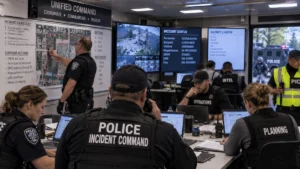
Giving a press conference after an Active Shooter incident requires careful communication, empathy, and strong leadership. Here are some rapid tips to help a Police Chief/PIO deliver an effective press conference under these difficult circumstances:
Preparation is Key:
- Gather accurate information: Ensure you have the most up-to-date and accurate information about the incident, casualties, and law enforcement response.
- Collaborate with your team: Coordinate with your public relations team, legal advisors, and relevant personnel to ensure a cohesive message.
Show Empathy and Compassion:
- Acknowledge the tragedy: Express sincere condolences to the victims’ families, the community, and anyone affected by the incident.
- Be compassionate: Demonstrate genuine concern for the well-being of those impacted by the incident.
Stay Calm and Composed:
- Maintain a steady demeanor: Project a calm and composed presence to instill confidence in your leadership and the law enforcement response.
- Control emotions: While empathy is important, avoid displaying too strong, emotional reactions that might detract from the message.
Stick to the Facts:
- Avoid speculation: Share only verified information and avoid speculating about motives or details that are not confirmed.
- Address misinformation: If there are inaccuracies circulating in the media, politely correct them with accurate information.
Communicate Clearly:
- Use plain language: Speak in clear, concise terms that are easily understood by both the media and the public.
- Avoid jargon: Minimize technical terminology that might confuse or alienate your audience.
Outline the Law Enforcement Response:
- Highlight actions taken: Explain the law enforcement response, including the timeline of events, steps taken to neutralize the threat, and any ongoing investigations.
- Praise officers’ efforts: Acknowledge the bravery and professionalism of law enforcement personnel who responded to the incident.
Address Public Safety Measures:
- Explain community safety: Describe any safety measures being implemented in response to the incident to reassure the public.
Express Confidence in the Investigation:
- Emphasize thoroughness: Reassure the public that a comprehensive investigation is underway to uncover all pertinent details.
- Pledge transparency: Commit to sharing information as it becomes available without compromising the investigation.
Share Available Resources:
- Offer support: Mention available resources for victims’ families, survivors, and community members, such as counseling services and helplines.
Prepare for Questions:
- Anticipate inquiries: Prepare for a range of questions, including those about motives, security measures, and law enforcement protocols.
- Stay on message: Bridge back to key points when questions veer off-topic.
Call to Action (CTA):
- Utilize a Call to Action for the viewers: Example – Asking witnesses to come forward.
Express Unity and Resilience:
- Highlight community strength: Emphasize the community’s ability to come together and support one another in times of crisis.
Thank First Responders and Collaborators:
- Express gratitude: Recognize the efforts of all first responders, partner agencies, and community members who assisted during the incident.
Conclude with a Message of Hope:
- Inspire unity: Conclude by emphasizing the community’s resilience and determination to overcome adversity together.
Remember that as a Police Chief/PIO, your communication sets the tone for the community’s perception of the incident and law enforcement’s response. By being empathetic, transparent, and composed, you can provide comfort, information, and a sense of security to both the media and your community.